Defensive coordinators don't lose sleep over how many plays you run. They lose sleep over how many pictures you show.
Here's something worth remembering the next time you're tempted to add another play. A defensive coordinator isn't worried about your play count. He's worried because you run the same handful of plays from a dozen different looks and he can't get a clean read on you. That's the whole game. More pictures, not more plays.
You can do this two ways, and neither one adds to your install.
The first is formations. From one base set you can get into trips, bunch, empty, or an unbalanced look without changing a single blocking rule. Power is still power. Inside zone is still inside zone. The defense just has to re-sort everything before every snap. The second is motion and shifts. Motion tells you man or zone, creates run leverage, pulls a defender's eyes off the point of attack, and can even force a defense to bail out of a blitz and play base. Shifts go a step further. They make the defense re-declare strength, re-set the front, and re-communicate the coverage, all before the ball moves. Communication cracks under stress, and you can create that stress on purpose.
The key is that none of this touches your base. If you have to re-teach the blocking because you shifted, you're doing too much. The whole point is to keep power, zone, counter, and your quick game working exactly the same no matter where you line up.
Here's how to use it without creating chaos:
- Pick your base formation and protect it. It should be the most coached, most repped, most understood thing your offense does.
- Tag, don't rebuild. Power right, power with jet motion, power from unbalanced. Same rules, new picture every time.
- Aim your looks at a weakness. Put the force defender in conflict, flip the strength away from their best player, or get your best receiver matched on their worst defender.
- Don't practice every look. Practice the rules. Walk through the new pictures, quiz the QB in meetings, and let the receivers talk through their alignment in warm-ups.
This is the part coaches miss. You can look like a brand new offense in November, with a formation you've never put on film, while still running the same play you've repped since spring. That's how you stay simple and still keep coordinators up at night.
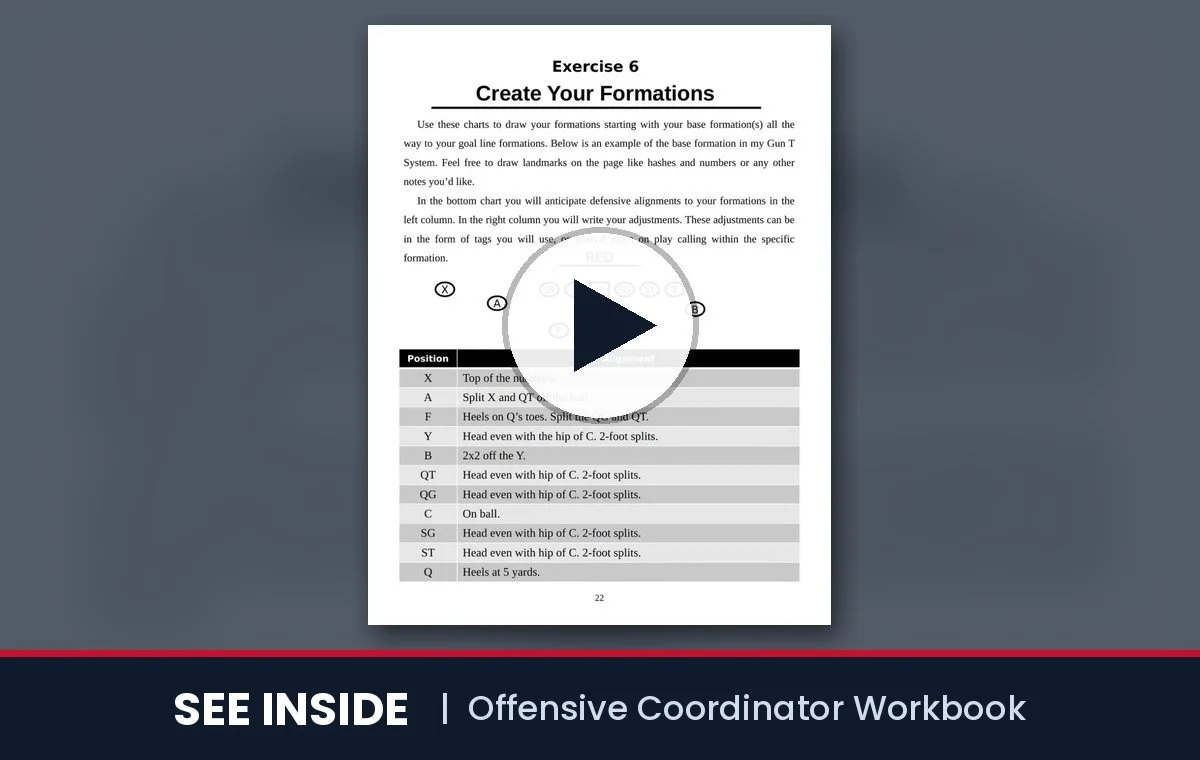
I built the Offensive Coordinator Workbook to help you organize exactly this: your base, your tags, and your weekly plan in one place.