The day you get the job as a new head football coach is the day everybody starts watching you, and most of them are hoping you fail a little so they were right about you. That sounds harsh, but it is the truth of taking over a program. The kids do not know you, the staff you inherited is wondering who is getting kept, the parents are talking in the parking lot, and the administration wants to see that they made a good hire. You cannot fix all of that with a great practice plan. The first 90 days are not about scheme, they are about earning the right to lead the people you just got put in charge of.
I have taken over programs, and I have watched a lot of good coaches take over programs and blow the first three months by trying to install everything at once. They come in swinging, change every rule, rip out the old offense, run off half the staff, and by August they have a roster full of confused kids who do not trust them yet. Let me walk you through how I would spend the first 90 days if I were taking over tomorrow, because getting this stretch right makes everything after it easier.
Win the building before you win games
The first thing a new head football coach has to understand is that you win the building before you win a single game. The building is the kids, the staff, the teachers in the hallway, the custodian who opens the weight room, the front office. If those people believe in you, they will give you time and grace when things get hard, and things will get hard. If they do not, every loss becomes evidence that the hire was wrong.
So before you talk about your offense, get seen. Be in the hallways. Eat lunch in the cafeteria. Learn the names of the teachers who have your players in class. Thank the people who do the unseen work. None of that shows up on a stat sheet, but it is the foundation everything else sits on, and it costs you nothing but time and attention.
Meet the kids first, and listen more than you talk
Your players are scared and excited at the same time, and how you handle the first meeting sets the tone for a long time. Do not open with a list of new rules. Open by telling them who you are and what you believe, then spend more time asking than telling. Meet with them in small groups or one on one if you can. Ask them what they love about the program, what they would change, who the leaders are, what last year felt like. You will learn more about your team in those conversations than in any film session.
The kids are also going to tell you, without meaning to, where the standards have slipped. When you take over a program you are usually taking over some bad habits, and the players know exactly what they are. Your job early is to listen for them, not to blow up over them.
Evaluate your staff honestly, but slowly
You inherited a staff, and your instinct might be to clean house and bring in your own people. Resist that instinct in the first 90 days unless someone is doing real harm. The coaches who were there before you know the kids, know the community, and know things about the program you do not know yet. Some of them will become your most loyal people if you give them a fair chance. Some of them will not fit, and that will become obvious, but let it become obvious instead of guessing on day three.
Watch how they coach, how they talk to kids, and how they carry themselves when they think nobody important is looking. That tells you more than a resume ever will. Give them real responsibility early and see what they do with it.
Set standards, do not just set rules
There is a difference between rules and standards, and a first year head coach who understands it has a real advantage. Rules are a list on a wall. Standards are what you actually enforce, every day, with everybody. If you say you are on time and then you let your best player stroll in late, you do not have a standard, you have a suggestion, and every kid on the team just learned that the rules are negotiable if you are good enough.
Pick a small number of things that matter and hold everyone to them the same way. A standard you enforce with your role players but not your stars is not a standard at all, it is a suggestion the whole team sees through. When the star and the backup get held to the same line, the whole program starts to trust that this is real.
Do not change everything at once
This is where I see the most new coaches get it wrong. You do not have to prove you are in charge by tearing everything down. Change the things that are broken or dangerous right away, then change the rest slowly, on purpose, once you have earned their trust. If the old offense fits your kids, keep running it while you build. You can always evolve it later. What you cannot get back is the goodwill you burn by making a hundred changes before anybody knows why you are making them.
Here is roughly how I would sequence the first 90 days:
- Days 1 to 30: Meet everybody. Players, staff, administration, teachers. Listen, learn names, and figure out what you actually inherited before you change anything.
- Days 30 to 60: Set your standards and start enforcing them the same for everyone. Begin evaluating staff by handing out real responsibility and watching how it goes.
- Days 60 to 90: Introduce your core system in the offseason program, keep what already works, and build daily habits around your standards instead of dumping a whole new scheme on them.
The first 90 days set up everything else
Nobody remembers your Week 3 install if you lost the building in your first month. Get the people right first, meet the kids where they are, be fair and patient with the staff you inherited, and hold a small set of standards without exception. Do that, and you will have a program that believes in you before you ever call a game, and that belief is what carries you through the losing streak that eventually comes for everybody. Everything has to show up on Friday night, but Friday night is built on the ninety quiet days nobody sees.
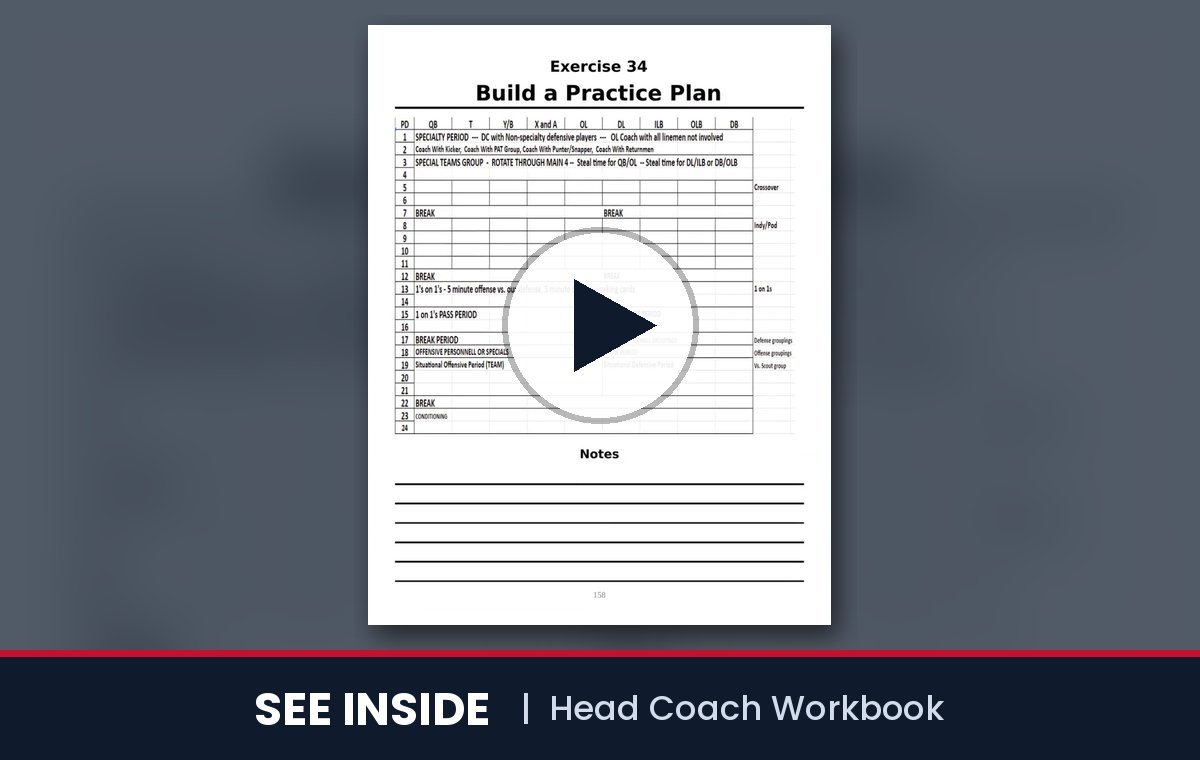
If you want a step by step plan for this stretch, the First 90 Days on the Job Checklist lays out exactly what to do and in what order, so you are not trying to remember it all at once. When you are ready to go deeper on building the whole program, the Head Coach Workbook walks through standards, staff, and structure the way I actually set them up, and the 30-60-90 Day Plan of Action gives you a day by day map for the transition. Take the job seriously, take the people seriously first, and the football part gets a whole lot easier.