Key Insights from the Coaching 101 Podcast - https://www.youtube.com/watch?v=uvZHThEXA3g&list=PL7sFBQw9f9DbQNdxOoj36A4ZGffHVnyD3&index=32
1. Numerical Advantage in Offensive Strategy
- Quarterback run game provides a critical numbers advantage against defensive formations
- When defenses stack the box, a running quarterback can neutralize the defensive plus-one advantage
- By including the quarterback as a potential runner, offenses can create unpredictable scenarios that challenge defensive alignments
2. Evolution of the Quarterback Position
- Modern quarterbacks are increasingly viewed as dual-threat athletes
- Recent NFL examples like Josh Allen, Jalen Hurts, and Lamar Jackson demonstrate the effectiveness of mobile quarterbacks
- High school coaches are now prioritizing athletic ability over traditional pocket-passing skills when selecting quarterbacks
3. Tactical Flexibility in Offensive Design
- Quarterback run game can be integrated into existing offensive schemes with minimal structural changes
- Coaches can implement quarterback runs by:
* Tagging existing run plays
* Adding read-option elements
* Utilizing formation variations to create running opportunities
- The approach allows for creative play-calling without completely redesigning the offensive system
4. Defensive Complexity and Limitations
- Running quarterbacks force defenses to:
* Hesitate in man-to-man coverage
* Reduce blitzing opportunities
* Allocate additional defensive resources to quarterback containment
- This strategic pressure creates more opportunities for offensive explosive plays
5. Athlete-Centered Coaching Philosophy
- Successful coaches prioritize putting their best athletes in positions to succeed
- Traditional quarterback "prototypes" are becoming less relevant
- Key considerations include:
* Speed and agility
* Leadership qualities
* Adaptability to different offensive schemes
* Potential for skill development
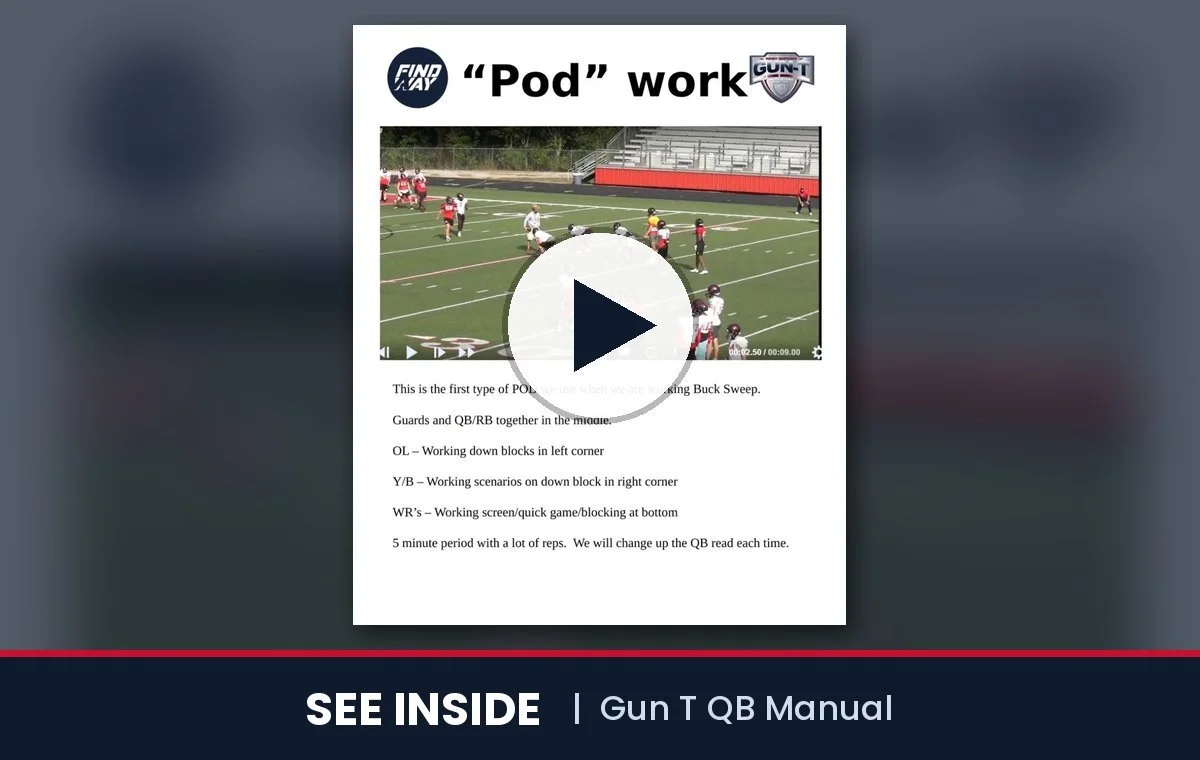
The quarterback run game is only worth having if it fits the quarterback you have. The Gun T QB Manual covers the mechanics and the reads, the QB Coach Workbook gives you a season of teaching structure to go with it, and the Jet Sweep Series shows how quarterback keeps tie into the rest of the offense.