I've stood on the sideline of an 0-10 season, and I've stood on the sideline of a 10-0 season, and I'll tell you the truth, most of the distance between those two records got covered on days nobody was watching. That's the part young coaches miss. Building a football program is not the same thing as coaching a team. A team is this year's roster, the kids in your locker room right now, the seniors you're going to cry over at the banquet. A program is the thing that keeps winning after those seniors leave, and honestly, after you leave. If everything you built walks out the door with your best class, you didn't build a program, you rented one for a couple of years.
When I took over a place that had been losing for a long time, I wanted the big turnaround speech to be the answer. It's not. The speech feels good on Monday and it's gone by Thursday. What actually turns around a program is a stack of small, unglamorous habits held to every single day until they stop being things you do and start being who you are. That takes years, and it takes doing the boring work long before the scoreboard rewards you for it.
What building a football program actually means
Culture is the word everybody throws around, and most of the time it means a slogan painted on the field house wall. That's not culture, that's decoration. Culture is the standard you hold to when you're tired, when you're winning by 30, and when you're losing by 30. It's whether the last kid on the depth chart picks up the trash without being told, whether your players look a teacher in the eye in the hallway, whether a kid who's late runs or doesn't. Nobody sees those moments on Friday night, but they're the whole thing. The scoreboard is just the receipt.
Here's the part that separates a program from a good season. The standard can't change with the results. The first year I did this right, the hardest thing wasn't holding the line when we were losing, it was holding the line once we started winning. Winning makes you soft on the details, and soft details are how programs slide back down. You don't rise to the level of your goals, you fall to the level of your systems, and your system is whatever you actually tolerate on a Tuesday in February.
The weight room and the offseason are where programs are built
Everybody wants to talk about Friday night. Programs get built in the offseason, in a hot weight room in June with nobody in the stands. That's where you find out who your team is going to be, and that's where the physical and the mental foundation actually gets poured. When we went from the bottom to the top, the roster didn't change much, the offseason did. Same kids, more reps, more accountability, a standard that didn't move. Two years of that showed up on the field looking like a talent jump. It wasn't talent, it was work that finally had somewhere to go.
You also have to build downward, not just this year's varsity. If your youth and feeder levels run a different offense and a different defense than you do, every freshman class arrives as a blank sheet, and you spend a year teaching what they should have shown up already knowing. Run one system top to bottom. When a seventh grader is learning the same base plays and the same language your seniors run, that kid arrives ahead, and multiply that across a whole class and you've bought yourself a head start that the school across town doesn't have.
The daily work of turning around a program
- Hold the standard every single day, not on a banner. Culture is the small stuff you refuse to let slide when you're tired, so decide what you will not walk past and then never walk past it.
- Build the offseason like it's the season. The weight room in the winter is where the wins are made, so treat January attendance the way you treat a fourth quarter.
- Run one system from youth up through varsity. Same plays, same words, same teaching, so kids arrive already fluent instead of starting over every level.
- Build a staff that teaches the same thing the same way. A coach who freelances the technique confuses kids, so get your assistants on the same page down to the footwork and the language.
- Win the building before you win the games. Relationships with your kids, the teachers, the parents, and your administration are the foundation everything else stands on, so invest there first.
It takes years, and that's the point
If you want building a football program to happen fast, coach somewhere else, because it doesn't. You'll do the unglamorous work for a while before anyone claps for it, and the temptation to chase a shortcut or a gimmick will be real. Don't. Programs are built with systems and daily habits, not with big speeches, and the coaches who understand that are the ones still standing when the wins finally show up. If your system only works for your best players, it doesn't work, so build one that carries the whole roster and every class behind them.
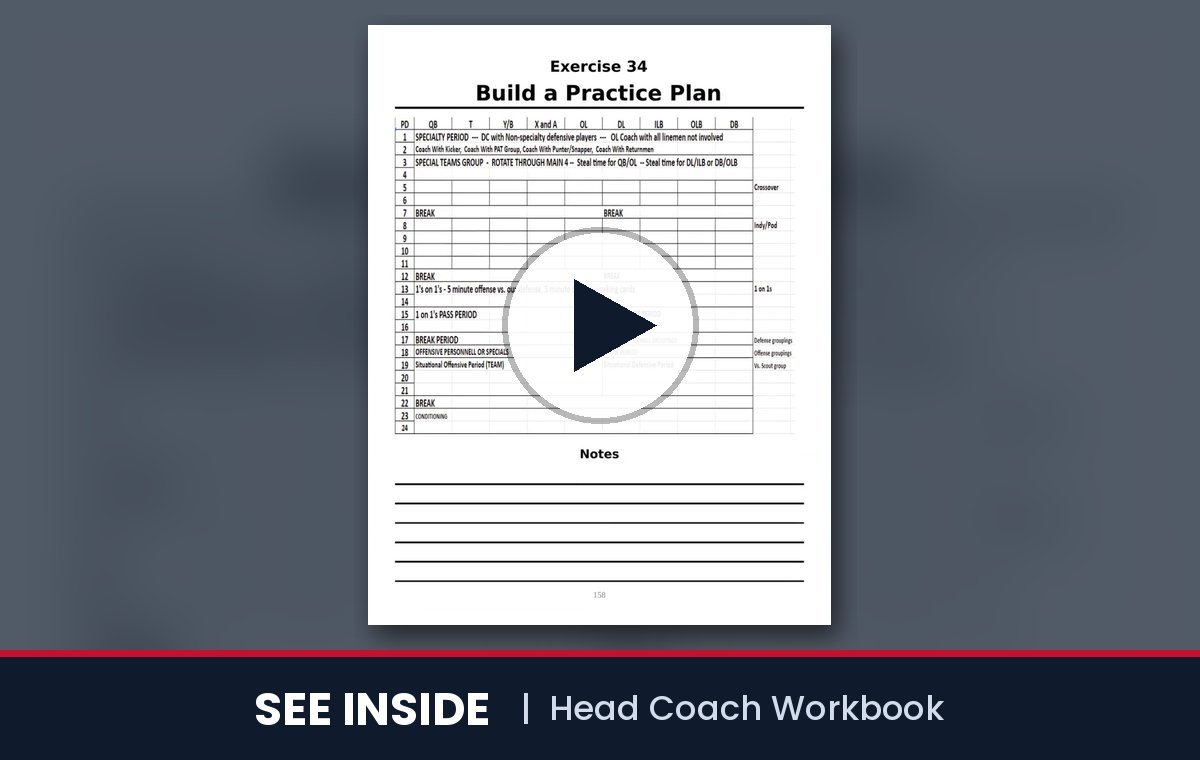
If you want the framework I actually use to lay this foundation, start with Keys to a Successful Program, which lays out the standards and the pieces that hold a program together over time. When you're ready to give your culture something real to teach instead of a wall slogan, the Team Themes Book gives you a way to build the mental side week by week, and the Head Coach Workbook walks you through organizing the whole operation, from staff to offseason to the daily standard. Build it right, hold the line, and let the years do their work.