Every so often a coach corners me at a clinic and asks the same question, some version of "is the Wing-T dead?" I get why they ask. They look around and see everybody in the shotgun throwing bubbles and running RPOs, and they figure the old downhill, misdirection stuff has been passed by. My answer is always the same. The football that made the Wing-T great never died, it just needed a better address. That's what the shotgun Wing-T is. You keep the deception and the toughness that has always won on Friday night, and you run it out of the gun where the modern game lives. That's the whole idea behind what we call the Gun T.
I didn't come to this because I wanted to be fashionable. I came to it because I got tired of choosing between two things I liked. I liked what the spread offense did to a defense, spreading them out, making them cover the whole field, giving my quarterback a clean look at the picture. And I liked what the Wing-T did to a defense, the misdirection, the false keys, the downhill run game that wears a front out by the fourth quarter. For years it felt like you had to pick one. The shotgun Wing-T is me refusing to pick.
What the shotgun Wing-T actually gives you
Start with the spread part, because that's what shows up on film first. When you line up in open formations and put a back in the gun, the defense has to honor the width. They can't just crowd the box and dare you to throw, because now the throw is easy and the field is stretched. That's the part a pure Wing-T from under center always fought against. Great offense, but it's harder to throw from, and your quarterback is turning his back to the defense on half his fakes and seeing nothing. From the gun he keeps his eyes up the whole time, he sees the box count, he sees the safety rotate, and he can play a lot smarter with the football.
Now the Wing-T part, which is the part that makes it mean. Underneath all those spread looks, we're still running series football. Buck, counter, jet, belly, the same misdirection families that have been punishing fast, aggressive defenses for fifty years. A defense that flies to the ball is exactly the defense that misdirection eats alive, and defenses have never been faster than they are right now. So the very speed that beats a soft spread offense is the speed we use against them. We give them a hard key, they chase it, and the ball is going the other way behind a pulling guard.
That's the marriage. Spread looks that make them defend grass, Wing-T series that make them wrong for defending it. A pure spread can get finesse on you, all edges and space and no answer when a game turns physical in November. A pure under-center Wing-T is tougher than nails but limits your quarterback's vision and your ability to make them pay for loading the box. The shotgun Wing-T sits right in the middle, and that middle is a good place to live.
Why it fits a normal high school roster
Here's the part that matters most to me, because I coach real kids on a real schedule. The shotgun Wing-T is built on a few series run from a bunch of different looks. It is not a hundred plays. It's a handful of plays dressed up a hundred ways. That distinction is the whole thing. You can be multiple on the surface, giving the defense a new formation and a new motion every week, while staying dead simple underneath for your own kids.
- Teach the series, not the play list. Your kids learn buck sweep, they learn the counter off it, they learn the play-action that ties to both. Once they own a series, every new formation is just a new picture of something they already know.
- Let motion and formation do the heavy lifting. You stress the defense's numbers and leverage by moving people around before the snap, not by adding new blocking rules. Same play, new stress on the defense.
- Tag your RPOs off the run you already run. From the gun, the quarterback reads a defender and throws it or hands it, so you punish a box that overcommits without installing a separate passing offense.
- Keep the quarterback's eyes up. The gun snap alone buys him vision on every fake, which means better decisions, fewer disasters, and a kid who plays faster because he can see.
- Stay downhill when it matters. When the game gets physical and you need four yards, you've still got the Wing-T run game to close it out, not just perimeter throws that die in the mud.
Putting it to work
If your system only works for your best players, it doesn't work, and that's really why I keep coming back to this offense. The shotgun Wing-T lets a normal roster look complicated to the other sideline while staying simple in your own meeting room. You get the spread offense benefits, the field stretched and the quarterback seeing the game, without giving up the toughness that decides close ballgames.
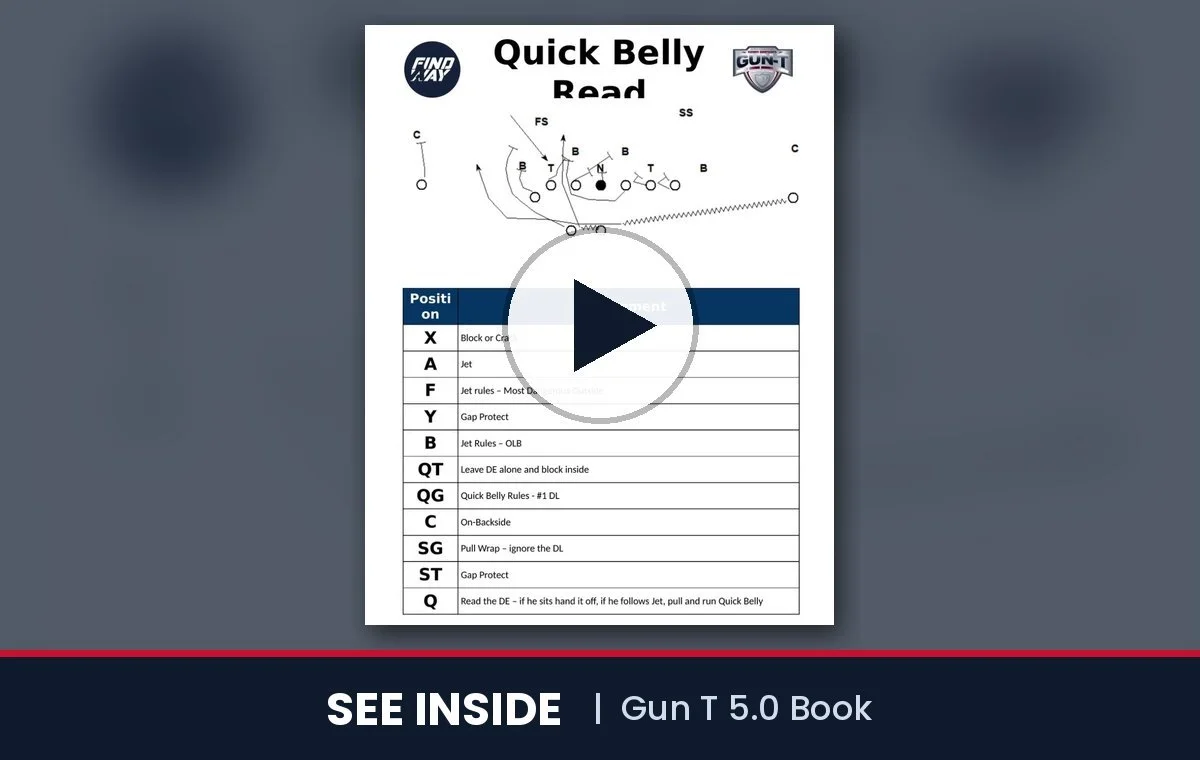
If you're thinking about making the move, start with the Powerpoint Shotgun Wing T Overview, which lays out the formations and the thinking in one place so you can see how it fits together. When you're ready to install the whole thing, the Gun T System - 5.0 Book walks through every series and how they tie to each other, and the Total Offense Series - Video Overview shows you the spread Wing-T on tape the way it actually looks on Friday night. Take one series, run it from three or four looks, and build from there. Spread looks, Wing-T toughness, and a system your kids can actually play.