Every run-first coach hits the same wall eventually. You're pounding the ball, moving the chains, and then the safeties start creeping down into the box because they've watched enough film to know you're going to hand it off. Now the alleys are crowded, the runs that were hitting for six are hitting for two, and you feel like you have to become a passing team just to loosen things back up. You don't. The play-action pass is how a run-first team throws for big plays without ever giving up who you are, and the whole thing is already sitting on the film you've put out there all season.
That's the part I want to be clear about up front. Play action passing doesn't work because your quarterback is a great thrower or because you drew up something exotic. It works because your run game is real. The fake only sells if the defense has a reason to bite on it, and the only thing that gives them that reason is the runs they've already been burned by. So the good news is, if your run game is worth defending, you've already done most of the work for your play-action pass game.
Build your play-action pass off the runs you already have
The mistake I see is a coach installing play action that looks nothing like his runs. He'll have a beautiful play-action concept where the line high-hats and pass sets, the back runs a fake that doesn't match anything, and then he wonders why the linebackers didn't move. Linebackers read your linemen and your backfield, not the label on the play. If the picture is different, they're not fooling anybody.
So pick a handful of play-action passes that mirror your best runs. Same line movement, same backfield action, same first two steps from the quarterback. If your bread and butter is a downhill buck series, your play action off the run game needs to look exactly like buck for as long as you can hold the fake. When the guard pulls the same way, when the back's path is identical, when the quarterback's mesh looks real, that's when the safety takes his false step and the top comes off the coverage. You're not asking the defense to be dumb. You're asking them to be disciplined against a picture they've been taught all game to attack.
Keep the routes simple and protect your quarterback
Once the fake sells, you don't need a complicated route tree behind it. Play action is not a dropback passing game and you shouldn't coach it like one. Keep the concepts clean. A high-low that puts a defender in a bind, one shot down the field for the big play, and a cheap completion outlet in case they didn't bite, that's plenty. Your quarterback should come off the fake with his eyes going to one or two spots, not surveying the whole field.
The other half of this, and the half people skip, is protection. Remember, your line just sold a run fake, which means they're firing out and run-blocking, not sitting back in a pocket. That leaves you with a free rusher off the edge more often than not. You need an answer for him. For most run-first teams the cleanest answer is to get the quarterback moving, a rollout or a waggle that cuts the field in half and puts him on the perimeter. Now the free rusher has to chase him, the reads are cut down to one side, and a limited passing quarterback is suddenly dangerous because he's throwing off structure with a clear picture instead of standing in there trying to be somebody he's not.
When to call it and how to make it count
- Call it on early downs off a heavy run tendency. First and second down, after you've established the run, is when defenders are keying the run hardest. That's the exact moment the fake is worth the most.
- Watch the safeties. When they start creeping up and shrinking the alleys, that's your green light. They're telling you they've quit respecting the pass, so make them pay for it.
- Mirror your top two or three runs, no more. You don't need twenty pass plays, you need a few good ones tied directly to the runs already on film. Rep those until the fake is clean.
- Give the free rusher an answer every time. If your protection scheme doesn't account for the edge, boot the quarterback away from it. Don't leave him standing in a pocket your line never built.
- Have a cheap completion built in. Not every play action hits the shot. Give your quarterback an easy outlet so a good call doesn't turn into a sack or a throwaway.
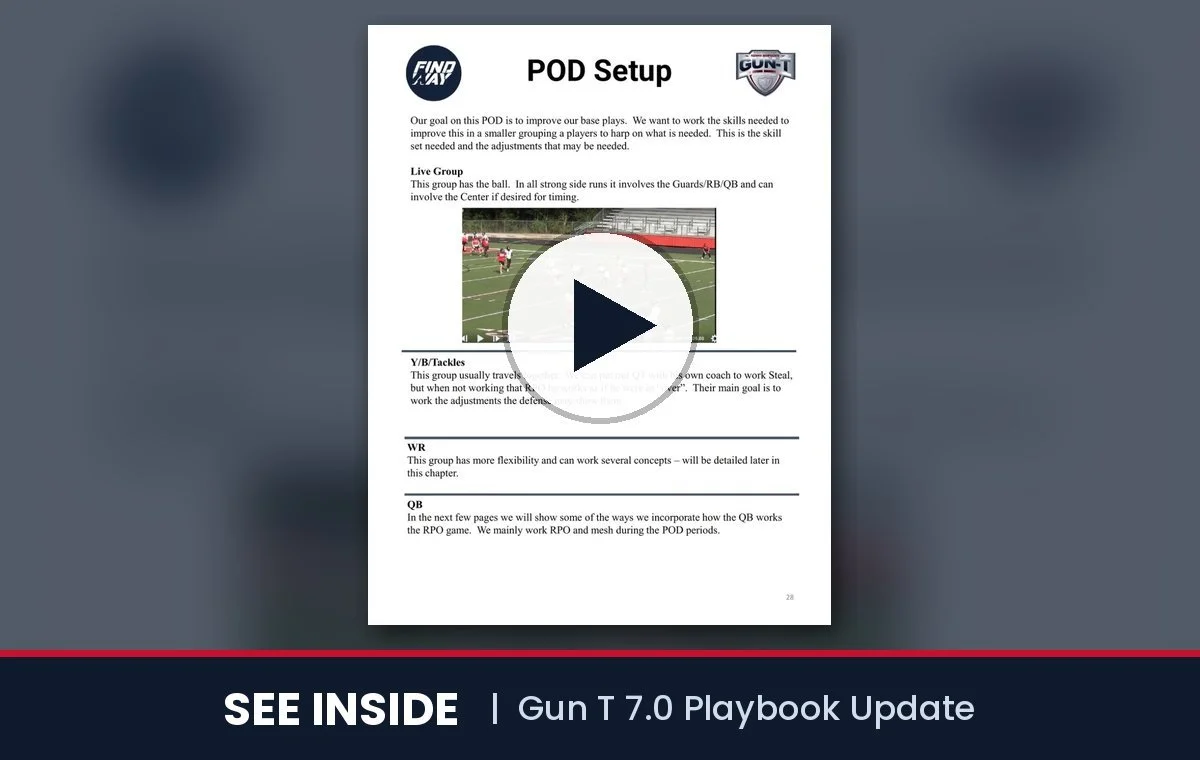
The point of all this is that you can throw for big plays without becoming a passing team, and you can do it with the quarterback you've actually got. If your system only works for your best players, it doesn't work, and play action is one of the truest examples of that, because it lets a run-first team and a limited thrower hit explosive plays off structure. If you want to see exactly how I build it, the reads, the protections, and the footwork, it's laid out in Play Action Passing in the Gun T System. For how these tie into the buck and counter series specifically, look at Flavors of Buck, Counter and Play Action Passes, and the whole thing is folded into the Gun T 7.0 Playbook Update. Build your play-action pass off the runs you already coach, and go make the safeties pay for creeping up.