A staff spends three weeks installing an offense, the quarterback can rep every play in shorts, and then Friday comes and the whole thing slows down because the call cannot get from the sideline to the huddle cleanly. The plays were fine. The delivery was the problem, and delivery problems are the cheapest ones you will ever fix.
That is what a wristband is for.
Who the band is actually for
A wristband is not there to help your best players. Your best players already know the call. It is there so your fifth offensive lineman, your backup tight end and the sophomore you had to move to slot all get the same information at the same speed your quarterback gets it. If your signal system only works for the three kids who have been in your program since seventh grade, it does not work.
The other thing a band buys you is tempo. When the call goes out as one number and everybody reads it off their own wrist, you are not waiting on a signal to get repeated three times, and you are not watching a guard look at the sideline with his hands on his hips. You snap the ball while the defense is still trying to get lined up.
Color code by concept, not by personnel
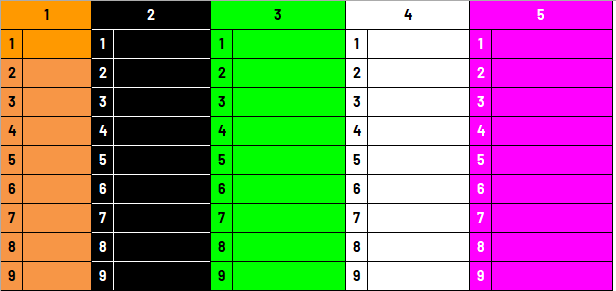
Players find a color faster than they find a number. Put your run game in one color, your play action in another, your quick game in a third, and keep it that way all season. A kid who blanks on the number can still find the neighborhood, and a coach who is changing the call at the line can say a color out loud and be understood.
The mistake I see most often is color coding by formation or by personnel group, which sounds organized and is useless at full speed, because the player does not know what group he is in until he hears the call.
Carry fewer calls than you think
Five panels with nine calls each gives you forty five, and forty five is more than you are going to run on a Friday night. Do not fill every square just because the square is there. The blanks are the space you need in week seven when you add a wrinkle, and a band with air in it reads faster than a band packed edge to edge.
Build it once, print it four-up
This is where most coaches lose an evening every week. They build one band, then rebuild it three more times for the other players, and by the third copy a number has drifted and two kids are reading different sheets.
I got tired of doing that, so my template does it for me. The Gun T Offensive Wristband Template is four-up. You type your plays into the top block one time, and the three bands underneath fill themselves in automatically. One page, four matching bands, and when you change a call on Tuesday you change it in one place.
It comes with a blank template plus my actual 2026 band filled in, so you can see how I lay out the run game, the play action and the keeper package before you build your own. It is an Excel file you can edit, it is five dollars, and you can have it printed and laminated before your next practice.
What to do this week
Write down every call you actually ran in your last two games. That list, not your playbook, is what belongs on the band.
Group those calls by concept and give each group a color.
Build the top block once and print four-up so every player is holding the same page.
Hand the bands out Monday and use the numbers in practice all week, so the number becomes the language and not a translation step.
Leave your blanks alone.
If you want the template I use, it is here: Gun T Offensive Wristband Template. If you want the install and organization behind it, start with the Gun T Playbook and Organizing the Gun T. And if you are building the defensive side of your game plan, the 34 Swarm Defensive Call Sheet does the same job for your coordinator.